- July 24, 2026
- 0 Comments
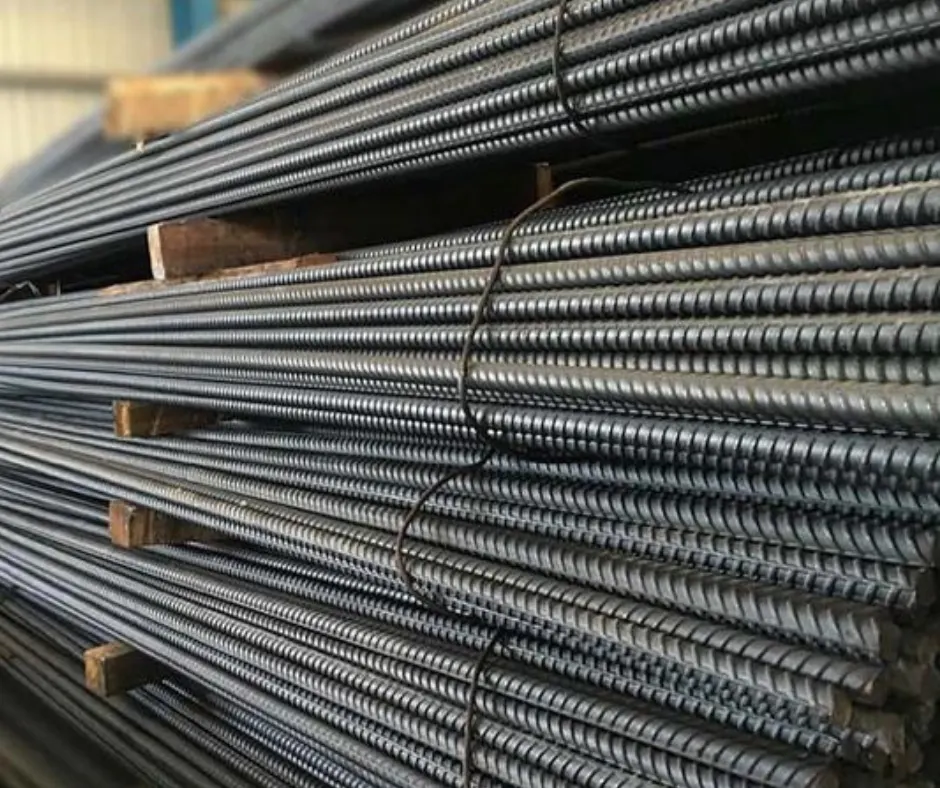
Reinforced concrete works because two materials cover each other’s weaknesses. Concrete handles compression and, crucially, provides a highly alkaline environment that keeps embedded steel passive. Steel handles tension.
Break that alkalinity, or let chlorides reach the steel, and the arrangement turns against itself. Corroding steel expands to several times its original volume, and that expansion cracks the concrete protecting it, admitting more moisture and more chloride. Once the cycle starts, it accelerates.
The UAE is one of the more aggressive environments on earth for this mechanism. At AL Jessour Steel Industries we supply reinforcement into coastal, inland and industrial projects across the Emirates, and durability is a subject we take seriously, because it is decided long before anyone pours concrete.
Why UAE Conditions Are So Demanding
Airborne chlorides. Much of the country’s development sits close to the coast, where salt-laden air deposits chloride onto exposed surfaces continuously.
Aggressive ground conditions. Sabkha and other coastal soils carry high concentrations of chlorides and sulphates. Sulphate attack degrades the concrete matrix; chlorides attack the steel directly. Foundations and basements in these conditions face both at once.
Humidity and temperature cycling. High humidity supplies the moisture corrosion requires. Daily temperature swings and, in some areas, wetting and drying cycles concentrate salts at the concrete surface. Elevated temperature also simply speeds up the chemistry.
Extended dry-then-wet exposure. Long dry periods followed by humidity or washdown produce some of the most damaging conditions for chloride ingress.
None of this makes durable construction difficult. It makes careless construction fail quickly.
The Primary Defence: Concrete, Cover and Compaction
Before any coating or additive is considered, three fundamentals do most of the work.
Cover depth
Cover, the distance from the concrete surface to the outermost steel, is the physical barrier chlorides must cross. It is also the most frequently compromised durability parameter on site. Inadequate spacer provision, spacers crushed underfoot, steel displaced during pouring, and congested reinforcement all reduce cover in exactly the places that matter most.
Specified cover for aggressive exposure classes is higher for good reason. Achieving it is a site discipline problem, and it deserves inspection attention proportionate to its importance.
Concrete quality and permeability
A low water-cement ratio, appropriate supplementary cementitious materials, and sound mix design produce a dense, low-permeability concrete that slows chloride ingress dramatically. Where sulphate-bearing ground is present, sulphate-resisting cement systems become essential.
Permeability, not strength, is the durability parameter. A high-strength mix that is poorly compacted is not a durable mix.
Compaction and curing
Honeycombing, voids and cold joints are direct pathways to the steel. Inadequate curing in UAE heat produces surface microcracking that has the same effect. Curing discipline in high temperatures is one of the most cost-effective durability investments available, and one of the most commonly shortened.
Bar Selection: Black, Galvanised and Epoxy-Coated
Once the concrete fundamentals are right, bar selection can add a further layer.
Uncoated (black) reinforcement is the standard product and performs well when cover and concrete quality are correct. On the majority of UAE projects, properly specified and properly placed black bar in good concrete is entirely appropriate.
Galvanised reinforcement carries a zinc coating that tolerates higher chloride levels before the steel itself is attacked, and gives useful sacrificial protection at minor coating damage. It costs more and requires care in handling.
Epoxy-coated reinforcement provides a barrier coating and is used in some aggressive exposure applications. Its performance depends heavily on coating integrity, damage during transport, handling, bending or fixing creates concentrated weak points, so site discipline determines whether the specification delivers what it promised.
Stainless reinforcement offers the highest durability and the highest cost, and is normally reserved for critical elements in severe exposure rather than whole structures.
The right answer is usually a combination: excellent concrete and cover everywhere, with enhanced bar specification targeted at the most exposed elements. Grade and ductility considerations matter too, and our overview of low carbon steel bars in the UAE and our comparison of BS 4449 vs ASTM A615 reinforcement standards are useful background when finalising specification.
Storage and Handling on Site
Steel corrodes before it is cast in, and UAE sites make this easy to arrange accidentally.
Store bar and mesh off the ground on timber or steel supports, never directly on sand or open soil, and never in standing water. Keep material away from areas where salt water, curing runoff or wash water collects. Cover material where practical, but ensure ventilation, sealed plastic sheeting traps condensation and produces exactly the humid microclimate you are trying to avoid.
Rotate stock so that material does not sit for months. Order against a call-off programme rather than stockpiling, which reduces exposure time and site congestion simultaneously.
A light, tightly adhering surface rust is normal and is not generally a cause for rejection, it can even improve bond. Heavy, flaking, pitted corrosion with section loss is a different matter and should be rejected. Knowing the difference prevents both unnecessary rejections and unacceptable acceptances.
Several of these issues appear in our wider article on common reinforcement steel mistakes in the UAE, which is worth circulating to site teams at project start.
Detailing Decisions That Affect Durability
Congested reinforcement prevents proper concrete flow and compaction around bars, creating voids exactly where cover was meant to be. Where congestion is unavoidable, larger bars at wider spacing, or mesh in place of individual bars, can open the section up.
This is one of the underrated durability benefits of welded wire mesh: consistent spacing, consistent cover when correctly supported, and faster placement with less disturbance. Our guides to reinforcement mesh in modern UAE projects, BRC mesh sizes and specifications and the benefits of working with wire mesh suppliers in Dubai explain where mesh is the stronger choice.
For clarity, since it is often confused: welded wire mesh is manufactured from compact coils fed into welding lines. Coils are a manufacturing input, not a site product. Contractors use rebar as their primary reinforcement and finished mesh where mesh is specified.
Additional Protective Measures
On severe-exposure and infrastructure projects, further measures may be justified: corrosion-inhibiting admixtures, surface treatments and penetrating sealers on exposed faces, waterproofing and protective membranes for buried elements in aggressive ground, drainage design that keeps water away from concrete rather than against it, and cathodic protection for critical marine structures.
Each of these supplements good concrete and adequate cover. None of them substitutes for it.
Durability as a Design Decision, Not a Repair Decision
The strongest predictor of a fifty-year structure is not the coating chosen. It is whether exposure conditions were assessed honestly at design stage, whether cover was specified appropriately and actually achieved, and whether the concrete was compacted and cured properly in difficult heat.
We take the same view of durability that we take of sustainability: decisions made early cost almost nothing and pay for decades, while corrections made late cost enormously. Our articles on steel in sustainable infrastructure and choosing the right steel for modern construction develop that argument further, durability and sustainability are, in practice, the same conversation. The longest-lived structure is almost always the lowest-impact one.
If you are specifying reinforcement for a coastal or aggressive-ground project in the UAE, we are glad to review your requirements and advise on product selection before you commit.
Frequently Asked Questions
1. Why is rebar corrosion such a problem in the UAE specifically?
The combination of coastal airborne chlorides, chloride- and sulphate-rich ground conditions in many areas, high humidity and high temperatures accelerates every stage of the corrosion process compared with milder climates.
2. Is surface rust on delivered rebar a reason to reject it?
Light, tightly adhering surface rust is normal and generally acceptable, it can even aid bond with concrete. Heavy flaking rust with pitting or measurable section loss is not acceptable and should be rejected.
3. What is the single most effective way to prevent rebar corrosion?
Adequate, correctly achieved concrete cover combined with dense, well-compacted, properly cured low-permeability concrete. These fundamentals prevent more corrosion than any coating.
4. Should I specify epoxy-coated or galvanised bar for coastal projects?
Sometimes, but not as a first move. Get cover and concrete quality right first, then consider enhanced bar specification for the most exposed elements. Epoxy coating in particular depends on coating integrity being maintained through handling, bending and fixing.
5. How should reinforcement be stored on a UAE site?
Off the ground on supports, away from standing water, salt spray and curing runoff, covered where practical but ventilated to avoid trapped condensation, and rotated so material does not sit for extended periods.
6. Does sabkha soil affect reinforcement or only the concrete?
Both. Sulphates attack the concrete matrix while chlorides attack the steel. Buried elements in such ground typically require sulphate-resisting cement systems, increased cover and appropriate waterproofing.
7. Can existing corrosion damage be repaired?
Yes, through established concrete repair methods, removing contaminated concrete, treating or replacing affected steel, and reinstating with appropriate repair materials, sometimes with cathodic protection. It is always more expensive than preventing the problem at design stage.
8. Does welded wire mesh help with durability?
It can. Consistent bar spacing and reduced congestion improve concrete flow and compaction around the steel, and mesh correctly supported on spacers gives more reliable cover than hand-tied bars in congested sections.