- July 23, 2026
- 0 Comments
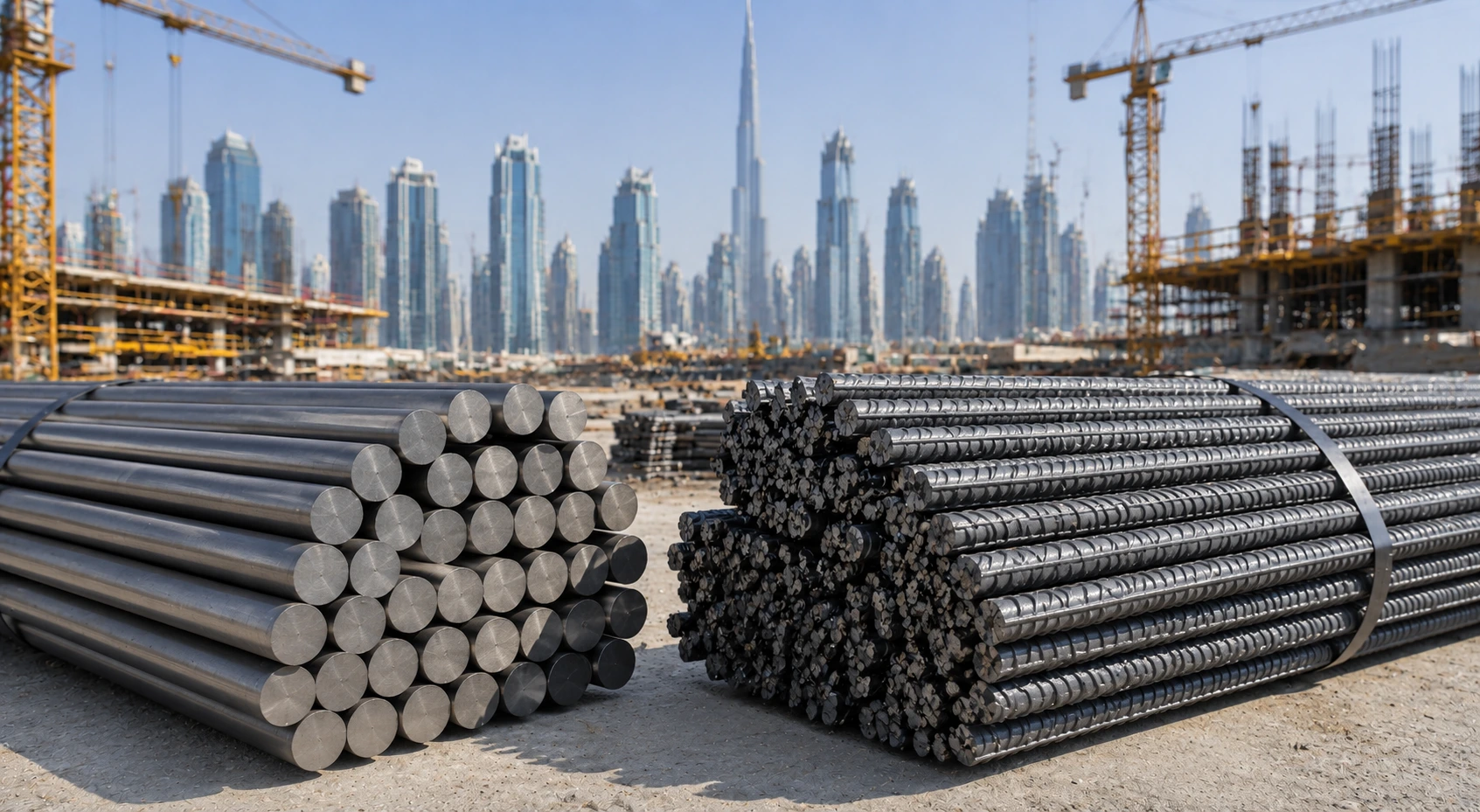
One of the most fundamental decisions on any UAE construction project is also one that gets surprisingly little attention until a procurement order is being placed: plain bars or deformed bars. Both are steel reinforcement bars, both come from the same family of products, and both appear on reinforcement schedules across Dubai and the wider Emirates. Yet they behave very differently inside concrete, and using the wrong one in the wrong application can affect structural performance, cost, and even compliance with your project specification.
This guide breaks down the difference between plain bars and deformed bars, where each one is actually used in UAE construction, how they compare on strength and bond performance, and how to make sure you are ordering the right product for your project.
What Are Plain Bars?
Plain bars, also called mild steel round bars or plain round steel bars, are reinforcement bars with a smooth, unribbed surface and a perfectly circular cross-section. They are typically produced from mild steel with a lower carbon content than deformed bars, giving them a softer, more ductile profile.
Because the surface is completely smooth, plain bars rely entirely on the friction and chemical adhesion between the steel and the surrounding concrete for bond strength. There are no mechanical features on the surface to lock the bar into the concrete, which significantly limits how much load the bar can transfer before slipping within the concrete matrix.
At AL Jessour Steel, our MS steel plain bars are manufactured to certified standards for the specific applications where plain bars remain the correct specification, rather than being marketed as a general-purpose structural reinforcement product.
What Are Deformed Bars?
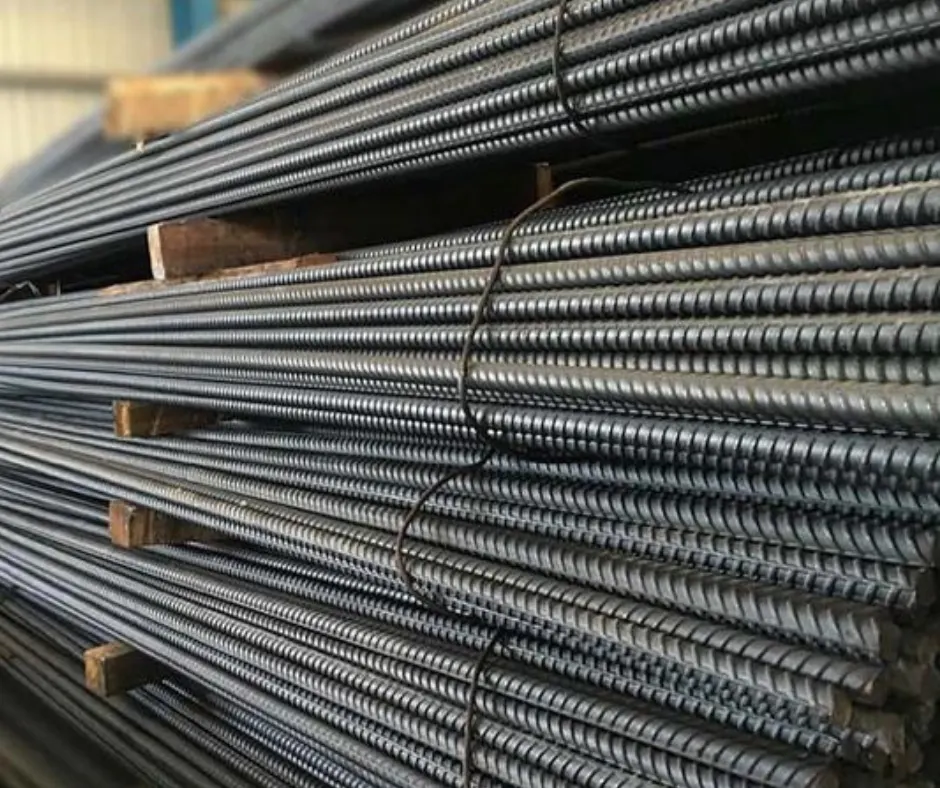
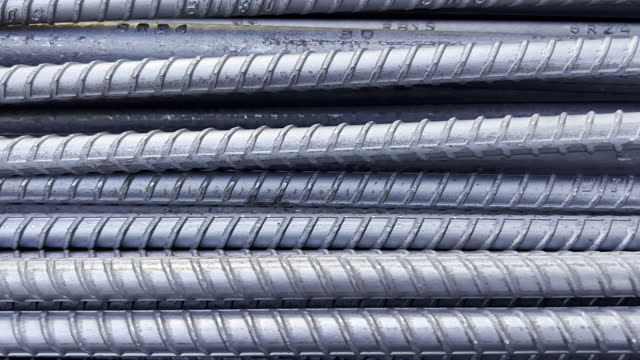
Deformed bars, often referred to simply as deformed rebar or ribbed bars, are reinforcement bars manufactured with a pattern of ribs, lugs, or indentations rolled into the surface during production. This surface pattern is the defining feature that separates deformed bars from plain bars and is the reason deformed bars dominate structural concrete construction across the UAE.
The ribs and lugs create a mechanical bond between the steel and the concrete, meaning the bar physically interlocks with the surrounding concrete rather than relying on friction alone. This mechanical bond allows deformed bars to transfer significantly higher tensile loads before any slip occurs, which is exactly what structural reinforcement needs to do.
Deformed steel bars in the UAE are manufactured to recognised standards including BS 4449 and ASTM A615, both of which define the rib geometry, spacing, and height required to achieve adequate mechanical bond. Our MS cold drawn deformed steel bars are produced to these certified standards for the full range of structural applications across residential, commercial, and infrastructure projects.
Plain Bars vs Deformed Bars — Key Differences
| Factor | Plain Bars | Deformed Bars |
| Surface | Smooth, no ribs | Ribbed with lugs and indentations |
| Bond Mechanism | Friction and adhesion only | Mechanical interlock plus friction |
| Tensile Strength | Lower (mild steel grade) | Higher (high-yield grade) |
| Bond Strength | Weak, prone to slip | Strong, resists slip under load |
| Typical Standard | BS 4449 (plain round) | BS 4449, ASTM A615 |
| Primary Use | Non-structural, light applications | Structural concrete reinforcement |
| Cost per Tonne | Generally lower | Generally higher |
| Common Diameters | 6mm to 25mm | 8mm to 32mm |
The tensile strength reinforcement steel comparison is the clearest way to understand why deformed bars dominate structural work. Plain bars are typically produced to a lower yield strength grade, often around 250 N/mm², while deformed bars commonly achieve 500 N/mm² under BS 4449 B500B or B500C grades, or 420 N/mm² under ASTM A615 Grade 60. That gap in yield strength, combined with the bond advantage, is why deformed bars carry almost all structural tensile loading in modern concrete design.
When to Use Plain Bars in Construction
Despite being far less common in structural work, plain bars still have legitimate and necessary applications across UAE construction projects. Understanding when to use plain bars in construction prevents both over-specifying an expensive deformed bar where it is not needed, and under-specifying a plain bar where mechanical bond is actually required.
Stirrups and Links in Some Applications
While deformed bars are increasingly used for stirrups due to bond requirements, plain round bars are still specified in certain detailing situations, particularly where bending and rebending of the stirrup is required and the smoother surface reduces stress concentration at bend points.
Dowel Bars and Expansion Joints
Plain bars are commonly used as dowels in pavement and slab expansion joints, where the design intent is actually to allow some movement or slip between the bar and the surrounding concrete on one side of the joint, rather than achieving full mechanical bond.
Non Structural Reinforcement Applications
Light fencing, mesh frameworks for non-load-bearing elements, temporary works, and certain fabrication uses outside of structural concrete commonly specify plain round bars due to their lower cost and easier workability.
General Fabrication and Manufacturing
Outside of construction entirely, plain round bars are widely used in general engineering fabrication, machinery parts, and metalwork where the smooth surface and consistent round profile are required rather than structural bond performance.
It is important to note that plain bars are not used in primary structural concrete elements such as beams, columns, and slabs in modern UAE construction. If a reinforcement schedule calls for plain bars in a structural element, this is worth double-checking with the design engineer, as it would be an unusual specification by current design practice.
When to Use Deformed Bars
Deformed bars are the default specification for virtually all structural concrete in the UAE, and for good reason. Anywhere concrete needs to resist tensile or flexural stress while remaining securely bonded to the reinforcement, deformed bars are the correct choice.
Slabs, Beams, and Columns
The best rebar for slabs beams and columns is, without exception in modern structural design, deformed bar. The mechanical bond ensures that as the concrete experiences load and begins to deflect or crack at a microscopic level, the steel remains engaged and continues to carry tensile load without slipping.
Foundations and Raft Slabs
Foundation elements carry significant and sustained structural loads over the life of the building, making the bond reliability of deformed bars essential for long-term performance.
Retaining Walls and Shear Walls
These elements experience combined loading conditions including bending and shear, both of which depend on reliable bond transfer between steel and concrete.
High-Rise and Infrastructure Projects
Given the scale and loading on Dubai’s high-rise towers and the UAE’s growing infrastructure pipeline, deformed bars are universally specified across structural elements in these project types, typically to BS 4449 B500B, B500C, or ASTM A615 Grade 60 depending on the consultant’s design code.
Welded Wire Mesh Production
Deformed wire drawn from compact coils is the standard input for welded wire mesh manufacturing, where the ribbed profile carries the same bond advantage into the finished mesh sheet once it is placed in slabs and screeds. This is a manufacturing application rather than a site one, since mesh is produced in a plant and delivered to site as a finished product. Our guide on compact coils and their uses covers this supply route in detail.
For more detail on how these grading systems compare and which applies to your project, our guide on BS 4449 vs ASTM A615 reinforcement steel standards covers the grade comparison in depth.
Deformed Bars vs Round Bars — Strength and Performance in Practice
The strength comparison between deformed bars vs round bars (a common way contractors phrase the plain bar comparison) becomes most apparent under load testing. In a pull-out test, where a bar embedded in a concrete block is pulled to measure bond failure, deformed bars consistently demonstrate higher bond strength and a more gradual failure mode, since the ribs continue providing mechanical resistance even as some surface friction is lost.
Plain bars, by contrast, tend to show a sudden bond failure once the friction and adhesion limit is exceeded, since there is no mechanical feature to provide a secondary line of resistance. This difference in failure behaviour is part of why structural design codes assign different bond stress values to plain and deformed bars, and why deformed bars are required wherever crack control and long-term structural reliability are design priorities.
This also explains why plain bars vs deformed bars UAE price comparisons should never be the sole deciding factor in specification. While plain bars are generally less expensive per tonne due to simpler manufacturing requirements, using them in place of deformed bars in a structural application would be both a code violation and a genuine safety risk, regardless of the cost saving.
Are Plain Bars Used in Structural Concrete?
This is one of the most frequently asked questions from procurement teams new to reinforcement steel ordering, and the direct answer is: not in primary structural elements under current UAE design practice. Structural design codes referenced by UAE consultancies, including those based on BS 8110, Eurocode 2, and ACI 318, are built around the assumption of deformed bar bond performance when calculating reinforcement requirements for beams, columns, slabs, and foundations.
Plain bars do still appear within structural drawings in supporting roles such as certain dowel applications, but they are never the primary tensile or flexural reinforcement in a structural concrete element. If your reinforcement schedule specifies plain bars for a structural member, it is worth confirming directly with the design engineer before procurement, since this would be inconsistent with standard UAE design practice.
Choosing the Right Bar Type for Your UAE Project
The decision between plain bars and deformed bars in practice is rarely a judgment call left to the contractor or supplier, since the structural engineer specifies the exact bar type, grade, and diameter required for every element on the reinforcement drawings. The contractor’s role is to procure exactly what is specified and verify it through mill certificates before placement.
That said, understanding the underlying reasoning helps procurement and site teams catch specification errors, communicate more effectively with consultants, and make informed decisions on the smaller number of applications, such as dowels and non-structural elements, where some flexibility exists.
AL Jessour Steel Industries supplies both MS steel plain bars and MS cold drawn deformed steel bars, each manufactured to certified standards for their respective applications. View our full product range or contact our technical team to confirm the right specification for your project.
Frequently Asked Questions
1. What is the main difference between plain bars and deformed bars?
The main difference between plain bars and deformed bars is the surface profile and bond mechanism. Plain bars have a smooth surface and rely on friction and adhesion for bond strength, while deformed bars have ribs, lugs, or indentations that create a mechanical interlock with concrete, providing significantly stronger and more reliable bond performance.
2. When should plain bars be used instead of deformed bars?
Plain bars are typically used in non-structural reinforcement applications, certain dowel bar applications in expansion joints, and general fabrication work outside of structural concrete. They are not used as primary reinforcement in structural beams, columns, slabs, or foundations under current UAE design practice.
3. Are deformed bars stronger than plain bars?
Yes. Deformed bars are typically manufactured to higher yield strength grades, commonly 500 N/mm² under BS 4449 or 420 N/mm² under ASTM A615 Grade 60, compared to around 250 N/mm² for standard plain round bars. Deformed bars also provide significantly stronger bond performance with concrete due to their ribbed surface.
4. Why are deformed bars used in slabs, beams, and columns?
Deformed bars are used in slabs, beams, and columns because the ribbed surface creates a mechanical bond with concrete that allows the steel to reliably transfer tensile and flexural loads without slipping. This bond reliability is essential for the long-term structural performance of these load-bearing elements.
5. Is there a price difference between plain bars and deformed bars in the UAE?
Plain bars are generally less expensive per tonne than deformed bars due to simpler manufacturing requirements. However, price should never be the deciding factor between the two, since structural applications require the bond performance of deformed bars regardless of the cost difference, and substituting plain bars in a structural element would not meet design code requirements.
6. Do plain bars and deformed bars follow the same standards?
Both plain and deformed bars are covered under recognised standards such as BS 4449, but the standard defines different requirements for each type, including rib geometry and spacing for deformed bars, which has no equivalent requirement for plain bars. ASTM A615 similarly covers deformed bars used under American-influenced design codes common on some UAE projects.