- March 20, 2026
- 0 Comments
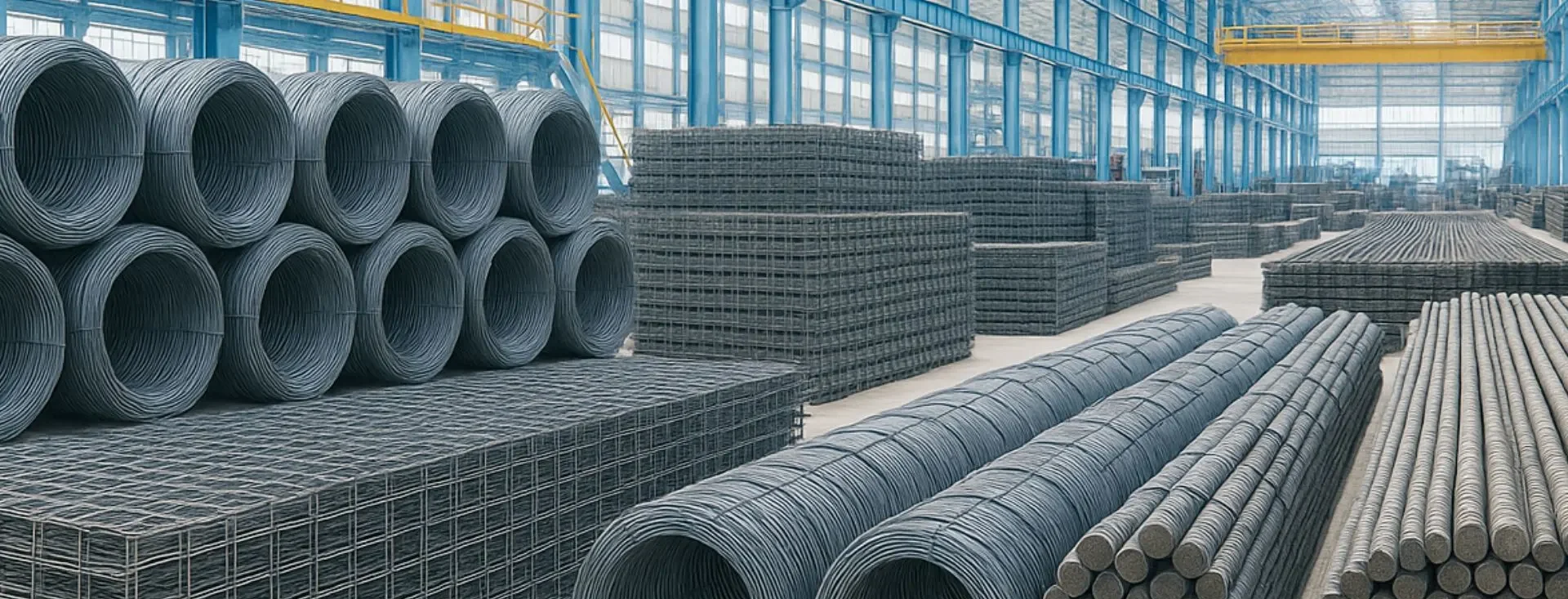
Every structural concrete project in the UAE begins with the same question from the engineer’s desk: which reinforcement steel standard applies to this project? For contractors, procurement managers, and developers working in Dubai and across the Emirates, the answer almost always comes down to two internationally recognised frameworks BS 4449 and ASTM A615.
Both are widely accepted in the UAE. Both are specified by leading engineering consultancies operating in the region. But they are not the same, and specifying the wrong one or sourcing steel that doesn’t comply with the specified standard can lead to failed inspections, structural rework, and significant project delays.
This guide breaks down the technical differences between BS 4449 and ASTM A615, explains where each standard is used in UAE construction, and helps you understand which applies to your project. If you are procuring reinforcement steel in Dubai and need certified material that complies with either standard, contact our technical team at AL Jessour Steel for specification support and mill-certified supply.
Why Reinforcement Steel Standards Matter in UAE Projects
Concrete is strong in compression but weak in tension. Reinforcement steel embedded in concrete carries the tensile loads the forces that would otherwise cause slabs to crack, beams to fail, and walls to split under load. Because this steel is doing critical structural work inside the concrete where it cannot be inspected after casting, it must meet precisely defined quality standards before it ever arrives on site.
Standards define the parameters that matter: yield strength, tensile strength, elongation (ductility), chemical composition, and bar geometry. Two bars can look identical and have completely different structural performance the standard is what guarantees the difference.
In the UAE, both BS (British Standards) and ASTM (American Society for Testing and Materials) frameworks are recognised by Dubai Municipality, Abu Dhabi Department of Urban Planning, and most international engineering consultancies operating in the region. The project consultant specifies which standard applies; your supplier needs to deliver certified material that proves compliance. Understanding what those standards actually require is what this guide covers. To see how these standards translate into the actual products we supply, visit our full product range.
What Is BS 4449 Reinforcement Steel?
BS 4449 is the British Standard specification for weldable reinforcing steel bars used in concrete. The current version in use is BS 4449:2005+A3:2016. It is the dominant reinforcement steel standard across the UK, Europe, and the Middle East including the UAE, where it is specified on the majority of projects by UK-trained consultancies.
BS 4449 Grades
BS 4449 classifies reinforcement steel into three grades, all with a characteristic yield strength of 500 MPa, differentiated by ductility class:
B500A Standard ductility. Minimum elongation at maximum force (Agt) of 2.5%. Used in lightly reinforced applications and mesh products. This is the grade behind most welded wire mesh (BRC mesh) used in UAE slab construction.
B500B Medium ductility. Minimum Agt of 5.0%. The most widely specified grade for deformed bars in UAE structural construction beams, columns, slabs, walls, and foundations.
B500C High ductility. Minimum Agt of 7.5%. Required for structures designed to seismic or special ductility requirements. Used on projects where the structural engineer has specified enhanced performance under dynamic loading.
Key Properties of BS 4449 Steel
Yield strength (Re): 500 MPa characteristic (minimum) Tensile strength (Rm): Minimum ratio of Rm/Re ≥ 1.08 (B500B) and ≥ 1.15 (B500C) Weldability: Fully weldable controlled carbon equivalent ensures consistent welding without preheat in standard conditions Bar surface: Ribbed (deformed) for improved concrete bond Chemical control: Carbon equivalent (Ceq) strictly controlled to ensure weldability and ductility consistency
The weldability of BS 4449 bars is a significant practical advantage on site. Welded connections, couplers, and mechanical splices all work more predictably with BS 4449 steel than with higher-carbon alternatives. This is particularly relevant for cold drawn deformed steel bar applications where connection integrity is critical.
What Is ASTM A615 Reinforcement Steel?
ASTM A615 is the American standard specification for deformed and plain carbon steel bars for concrete reinforcement. Published by ASTM International, it is the dominant rebar standard in North America and is also specified on UAE projects by American-trained consultancies and on infrastructure projects with US-influenced design codes.
ASTM A615 Grades
ASTM A615 classifies rebar by yield strength in US customary units (ksi), with metric equivalents:
Grade 40 (280 MPa) Lower strength, used in minor structural applications. Rarely specified for UAE commercial or high-rise construction.
Grade 60 (420 MPa) The standard grade for structural construction. Minimum yield strength of 420 MPa, tensile strength of 620 MPa. This is the ASTM equivalent most commonly compared to BS 4449 B500B.
Grade 75 (520 MPa) High-strength grade used in heavy infrastructure such as bridge decks, large retaining walls, and heavily loaded transfer plates.
Grade 80 (550 MPa) Introduced in recent editions. Used in specialised high-strength structural applications.
Key Properties of ASTM A615 Steel
Yield strength: Grade 60 = 420 MPa minimum Tensile strength: Grade 60 = 620 MPa minimum Elongation: 9% minimum (8-inch gauge length) for Grade 60 Weldability: Not inherently guaranteed ASTM A615 has no carbon equivalent requirement, meaning individual heats may or may not be weldable. Welding requires heat analysis and may need preheat procedures Bar surface: Deformed (ribbed) for concrete bond
The absence of a carbon equivalent requirement in ASTM A615 is a crucial point for site engineers. Unlike BS 4449, you cannot assume an A615 bar is weldable without reviewing the mill certificate’s chemical analysis. On UAE sites where rebar splicing and welded connections are common, this is a practical procurement consideration.
BS 4449 vs ASTM A615 Direct Technical Comparison
|
Property |
BS 4449 B500B |
ASTM A615 Grade 60 |
|
Yield Strength |
500 MPa (characteristic) | 420 MPa (minimum) |
|
Tensile Strength |
≥ 540 MPa |
≥ 620 MPa |
|
Ductility (Elongation) |
Agt ≥ 5.0% |
9% min (8″ gauge) |
|
Weldability |
Fully weldable (Ceq controlled) |
Not guaranteed heat analysis required |
|
Carbon Equivalent |
Specified and controlled |
Not required by standard |
|
Grade Classification |
By yield strength + ductility class |
By yield strength only |
|
Bar Marking |
B500B marking on rib pattern |
Grade marking rolled into bar |
|
Primary Region |
UK, Europe, Middle East (incl. UAE) |
North America, some global projects |
|
Seismic Design Use |
B500C for seismic (higher Agt) |
A706 preferred for seismic (not A615) |
| Applicable UAE Projects | Majority of consultant-specified projects |
US-design-influenced projects |
The yield strength gap is the most practically important difference. BS 4449 B500B delivers 500 MPa yield 19% higher than ASTM A615 Grade 60’s 420 MPa minimum. On a reinforced concrete design, this means a BS 4449-specified structure can achieve the same structural performance with less steel by weight, or provide superior performance with equivalent steel quantities. For large UAE projects, this difference in material efficiency has real cost implications.
For a detailed look at how these standards interact with the common reinforcement steel mistakes made on UAE construction sites, including incorrect grade substitution, see our dedicated guide.
Which Reinforcement Steel Standard Is Used in UAE Construction?
The UAE does not have a single mandatory national rebar standard that overrides international codes. Instead, the project’s engineer of record or lead consultant specifies the standard, and that specification becomes the contractual and regulatory requirement for that project.
In practice, the split broadly looks like this:
BS 4449 dominates the majority of UAE projects. Most of Dubai’s major developers Emaar, Nakheel, Aldar, Meraas work with UK and European engineering consultancies that specify BS 4449 as the default reinforcement standard. Dubai Municipality’s technical standards reference BS codes for reinforced concrete construction. If you are working on a residential tower, commercial development, or mixed-use project in Dubai and the consultant has not specified otherwise, BS 4449 B500B is almost certainly what the drawings require.
ASTM A615 appears on US-influenced and infrastructure projects. Projects designed under American codes (ACI 318 for concrete design) will specify ASTM A615. This includes some US-funded infrastructure projects, American-developed industrial facilities, and projects in free zones with US-trained engineering teams.
Abu Dhabi projects follow similar patterns, with Abu Dhabi International Building Code (ADIBC) referencing both BS and ASTM standards depending on the project type.
The safest approach for any contractor or procurement manager is to confirm the specified standard directly from the structural drawings before ordering. If the drawings specify B500B, supply BS 4449-certified material. If they specify Grade 60, supply ASTM A615-certified material. Do not substitute one for the other without explicit written approval from the engineer of record the standards are not interchangeable even where yield strength appears similar.
Understanding how reinforcement mesh is used across modern UAE projects alongside bar reinforcement, and how standard compliance affects each product type, is important for procurement teams managing combined mesh and bar orders.
Can You Substitute BS 4449 for ASTM A615 (or Vice Versa) on a UAE Project?
This is one of the most common practical questions on UAE construction sites, and the answer is: not without engineer approval.
The standards are not equivalent. BS 4449 B500B has a higher yield strength (500 MPa vs 420 MPa) and guaranteed weldability. ASTM A615 Grade 60 has higher minimum tensile strength (620 MPa vs ~540 MPa) and different elongation measurement methods. A structural design calculated to BS 4449 assumptions uses different safety factors, bar areas, and detailing rules than a design calculated to ASTM/ACI.
Substituting one standard for the other without recalculating the design is a structural risk and a contractual breach. In the UAE, where projects go through Dubai Municipality or Abu Dhabi Authority approval, non-compliant material can result in rejected inspections, required demolition of non-compliant concrete, and significant liability.
Always procure to the specified standard and obtain mill certificates that confirm compliance. If you need to make a substitution due to supply constraints, submit a formal material substitution request to the consultant and get written approval before placing the order.
Mill Certificates What to Check When Procuring Rebar in Dubai
Whether you are procuring BS 4449 or ASTM A615 reinforcement steel in Dubai, the mill certificate (also called a test certificate or material certificate) is your proof of compliance. Here is what to verify on every certificate:
For BS 4449: Confirm the grade marking (B500A, B500B, or B500C), the carbon equivalent value (Ceq), yield strength (Re), tensile strength (Rm), Rm/Re ratio, and Agt elongation value. All must meet the standard minimums for the specified grade.
For ASTM A615: Confirm the grade (Grade 40, 60, 75, or 80), yield strength, tensile strength, and elongation. Also request the chemical analysis particularly carbon content if any welding is planned on site.
At AL Jessour Steel, every order is supplied with full mill documentation. Our MS steel plain bars and cold drawn deformed bars are produced to certified standards with traceability documentation for project quality records. For compact coil applications, our cold drawn steel compact coils carry the same certification standards.
Sustainability Considerations in Reinforcement Steel Selection
Steel selection in UAE construction increasingly involves sustainability criteria alongside structural performance. Both BS 4449 and ASTM A615 steel can be produced from recycled scrap via electric arc furnace (EAF) manufacturing the same process used at most modern UAE and GCC steel plants.
EAF-produced steel has a significantly lower carbon footprint than blast furnace steel. For projects targeting green building certifications such as LEED or the UAE’s Estidama Pearl Rating System, sourcing reinforcement steel with documented recycled content and low embodied carbon is becoming a formal procurement requirement.
The move toward eco-steel and sustainable green construction standards is reshaping how UAE developers and consultants specify reinforcement materials. AL Jessour Steel’s NextGen Eco-Steel products are designed to meet both the structural standard requirements of BS 4449 and ASTM A615 and the sustainability expectations of modern UAE project specifications. The broader role of steel in sustainable infrastructure from low-carbon production to recyclability at end of life is explored in our dedicated sustainability guide.
If you want to understand how low carbon steel bars are changing UAE construction procurement, that guide covers the shift in detail.
Choosing the Right Reinforcement Steel Supplier in Dubai
Once you know which standard your project requires, the next decision is supplier selection. For both BS 4449 and ASTM A615 reinforcement steel in Dubai, the supplier evaluation criteria are the same:
Certification and traceability can they provide mill certificates that reference the specific standard and show the required mechanical and chemical test results?
Consistency across large orders can they guarantee the same grade, heat, and certification documentation across multiple deliveries on a long-running project?
Technical support do they understand the difference between B500B and B500C, or between Grade 60 and Grade 75? Can they advise on the right product for your structural requirement?
Stock availability and lead times particularly important in Dubai’s active construction market where programme pressure is constant.
AL Jessour Steel Industries supplies certified reinforcement steel to contractors, developers, and procurement teams across the UAE. Whether your project specifies BS 4449 or ASTM A615, our team can provide the right product with full certification and reliable delivery. To discuss your reinforcement steel requirements, contact our team or explore our full product range.
Frequently Asked Questions
1. What Is The Main Difference Between Bs 4449 And Astm A615 Reinforcement Steel?
The primary differences are yield strength and weldability. BS 4449 B500B has a characteristic yield strength of 500 MPa with guaranteed weldability through controlled carbon equivalent. ASTM A615 Grade 60 has a minimum yield strength of 420 MPa and does not guarantee weldability by default a chemical analysis is needed before welding. BS 4449 also classifies steel by ductility class (A, B, C), which ASTM A615 does not.
2. Which Reinforcement Steel Standard Is Used In Dubai Construction Projects?
The majority of Dubai construction projects specify BS 4449, particularly B500B grade, as it aligns with UK-influenced engineering design codes followed by most Dubai consultancies. ASTM A615 is specified on projects designed under American codes (ACI 318) or on US-influenced infrastructure projects. Always confirm the standard from the structural drawings before procurement.
3. Can Bs 4449 B500b Be Substituted For Astm A615 Grade 60 On A Uae Project?
No, not without written approval from the engineer of record. The standards have different yield strengths, ductility requirements, and design assumptions. Substituting one for the other without recalculating the design is a structural risk and a contractual violation. Submit a formal material substitution request if supply constraints require a change.
4. What Grades Are Available Under Bs 4449?
BS 4449 defines three grades: B500A (standard ductility, Agt ≥ 2.5%), B500B (medium ductility, Agt ≥ 5.0%), and B500C (high ductility, Agt ≥ 7.5%). All three have a characteristic yield strength of 500 MPa. B500B is the most widely specified grade in UAE structural construction.
5. What Grades Are Available Under Astm A615?
ASTM A615 defines Grade 40 (280 MPa), Grade 60 (420 MPa), Grade 75 (520 MPa), and Grade 80 (550 MPa). Grade 60 is by far the most commonly specified for structural construction in the UAE and globally.
6. Is Astm A615 Steel Weldable?
Not automatically. ASTM A615 does not include a carbon equivalent requirement, meaning individual heats of A615 steel can vary in carbon content. Before welding any A615 bar on site, request the chemical analysis from the mill certificate and confirm it meets the carbon equivalent limits for the welding procedure being used. BS 4449 steel does not have this uncertainty weldability is built into the standard.
7. Does Al Jessour Steel Supply Both Bs 4449 And Astm A615 Certified Rebar In Dubai?
Yes. AL Jessour Steel supplies reinforcement steel with full mill certification to project-specified standards. Our technical team can advise on the correct grade and product for your structural requirements. Get in touch to discuss your project.
8. What Should I Check On A Mill Certificate For Rebar In The Uae?
For BS 4449: verify grade designation (B500A/B/C), carbon equivalent (Ceq), Re (yield strength), Rm (tensile strength), Rm/Re ratio, and Agt (elongation). For ASTM A615: verify grade, yield strength, tensile strength, elongation, and chemical composition if welding is planned.
Conclusion:
For engineers, contractors, and procurement managers working on UAE construction projects, understanding the difference between BS 4449 and ASTM A615 is not an academic exercise it is a practical requirement that affects structural compliance, site operations, and project delivery. BS 4449 B500B is the dominant standard in Dubai and the wider UAE, offering higher yield strength and guaranteed weldability. ASTM A615 Grade 60 is the go-to standard for US-code projects and remains widely recognised across the region.