- July 15, 2026
- 0 Comments
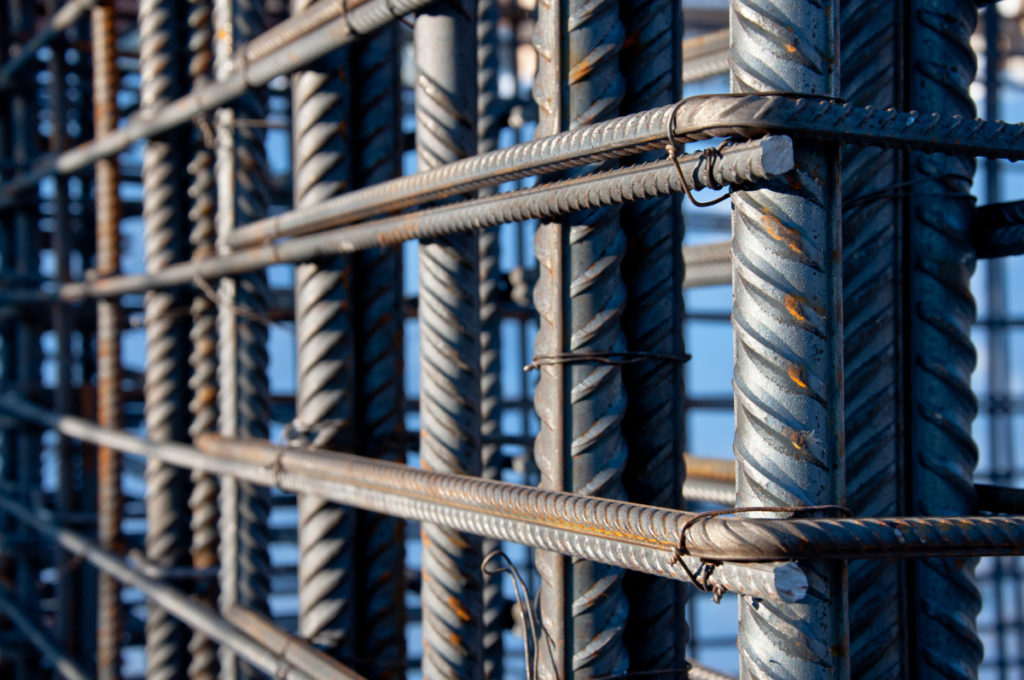
Every reinforced concrete project reaches the same fork in the road. Do you buy straight-length bar and cut and bend it on site, or do you buy it fabricated to schedule and delivered ready to fix?
Twenty years ago, most UAE sites chose the first option. Today, on any project of meaningful size, the second has become the default, and for reasons that go well beyond convenience. At AL Jessour Steel Industries we operate cut and bend as a core service, and in this guide we explain exactly how the process works, what it demands from your team, and where it saves or costs you money.
What Cut and Bend Actually Means
Cut and bend is the offsite fabrication of reinforcement steel to the exact shapes, lengths and quantities set out in your bar bending schedule. Bars arrive at site labelled by bar mark, bundled by pour or element, and ready to be placed by your steel fixers.
Nothing is cut on site. Nothing is bent on site. No offcuts accumulate in a corner of the compound waiting to be scrapped.
That is the whole idea, and its value is easy to underestimate until you have run both models on comparable projects.
The Process, Step by Step
1. Schedule submission
Everything starts with the bar bending schedule (BBS). This is the controlling document: it lists every bar mark, shape code, diameter, length, bending dimensions and quantity. If you do not yet have a schedule, we can work from approved drawings and prepare one for your engineer’s review.
2. Schedule review and query resolution
Before a single bar is cut, we check the schedule for buildability, standard compliance, shape code validity and bend radii appropriate to the diameter. Queries go back to your engineer. This step is not bureaucracy, it is the cheapest possible moment to find an error. A shape code problem caught here costs an email. Caught on site, it costs a delivery.
3. Material allocation and traceability
Steel is allocated from certified stock, with mill test certificates tied to the heat numbers used. Traceability matters for consultant approval, and it matters more on projects with green building or ESG reporting obligations.
4. Cutting and bending
Bars are cut to length and bent to shape on automated lines, with dimensional tolerances controlled against the governing standard. Automated bending delivers repeatability that manual site bending simply cannot match across thousands of identical bars.
5. Tagging and bundling
Each bundle carries a tag identifying the bar mark, shape, diameter, length and quantity, and is grouped logically, usually by element or by pour, so your fixers are not sorting steel instead of fixing it.
6. Scheduled delivery
Delivery is phased to your programme. On congested urban sites, this is often the single largest practical benefit: you receive what you need, when you need it, rather than storing three months of steel in a space you do not have.
The Real Economics
The headline rate for cut and bend is higher than for straight-length bar. Every contractor sees that immediately. What is less visible is everything it removes from your cost base.
Offcut waste disappears. Site cutting typically wastes somewhere in the range of five to ten percent of purchased steel. That waste is paid for at full rate and sold as scrap at a fraction of it.
Bending labour and plant disappear. No bar bending machines, no shear, no dedicated bending crew, no maintenance, no power draw, no space allocation.
Storage requirement collapses. Straight-length bar needs a laydown yard. Scheduled bundles need a staging area for a few days.
Programme risk drops. Fixers fix. They do not wait for the bending crew to catch up, and they do not stop because the wrong shape was produced.
Quality disputes reduce. Consistent bend radii and dimensional accuracy mean fewer non-conformance reports and fewer arguments about cover.
We explored several of the failure modes this avoids in our article on common reinforcement steel mistakes in the UAE, and the majority of them are site-fabrication problems rather than material problems.
Standards and Tolerances You Should Be Specifying
Bending is governed by the standard your project adopts, and the two matters that most often cause disputes are bend radii and dimensional tolerances.
Bend radii are diameter-dependent for good engineering reasons: bending a large bar too tightly damages the steel and can initiate cracking. A supplier who bends to whatever radius their machine is set to, rather than to the specified radius for that diameter and grade, is creating a latent defect.
Grade and standard also determine bendability characteristics. If you are still deciding which standard governs your reinforcement, our comparison of BS 4449 vs ASTM A615 reinforcement steel standards sets out the practical implications, and our overview of low carbon steel bars in the UAE covers where softer, more ductile grades are the right call.
When Cut and Bend Is Not the Answer
We are not going to pretend it suits every situation.
Very small works, a villa extension, a boundary wall, minor remedial concrete, may not justify the scheduling effort. Projects where the design is still genuinely fluid can find fabricated steel arriving against a superseded revision. And genuinely urgent emergency works sometimes need whatever is in the yard right now.
The honest test is this: if your drawings are approved and your programme is real, cut and bend wins on almost every project above a modest size. If your drawings are still moving, fix the drawings first.
Where Mesh Fits Alongside Cut and Bend
Cut and bend addresses bar. It does not address everything.
For slabs, screeds, ground bearing floors and many wall applications, welded wire mesh removes far more fixing labour than cut and bend can, because you are placing a sheet rather than tying individual bars. Standard mesh types cover a large share of applications, and where they do not, bespoke configurations can be produced to your requirement.
Our guides to BRC mesh sizes and specifications, custom steel mesh for modern construction in Dubai and reinforcement mesh in modern UAE projects explain how to specify mesh properly and where it delivers the biggest labour savings.
A point worth clarifying, because it is frequently muddled in the market: welded wire mesh is manufactured from compact coils, which are a factory input feeding mesh welding lines. Contractors do not normally purchase coils as a site product, contractors buy rebar and finished mesh. If a supplier is quoting you coils for site use, ask what they actually intend to deliver.
Working With Us on a Cut and Bend Package
The projects that run smoothest share three habits.
They send schedules early, in editable format, with revision control that everyone respects. They nominate one person to own the schedule so that queries have a single destination. And they give us a delivery programme rather than a series of phone calls.
Do those three things and cut and bend becomes almost invisible, steel simply arrives, correct and on time, and your fixers keep fixing. That is what the service is for.
If sustainability reporting is part of your obligations, it is also worth reading how material choice affects your position: choosing the right steel for modern construction and steel in sustainable infrastructure both cover the documentation clients are now asking for.
Frequently Asked Questions
1. What is a bar bending schedule and who prepares it?
It is the document listing every bar mark, shape code, diameter, length, bending dimension and quantity for a project. It is normally prepared by the design consultant or the contractor’s detailing team. If you do not have one, we can prepare a schedule from approved drawings for your engineer’s review.
2. How much lead time do you need for cut and bend orders?
It depends on tonnage, shape complexity and current plant loading. The determining factor is usually not our capacity but how quickly schedule queries are resolved. Submitting schedules early, with a named person able to answer queries, shortens lead time more than anything else.
3. Is cut and bend more expensive than buying straight-length bar?
The rate per tonne is higher, but total delivered cost is usually lower once you account for eliminated offcut waste, removed bending labour and plant, reduced storage, and improved programme certainty.
4. How much steel does site cutting typically waste?
Commonly around five to ten percent of purchased tonnage, depending on how the cutting is planned. That waste is bought at full rate and recovered at scrap value.
5. Can you deliver in phases to match my pour programme?
Yes. Phased delivery against an agreed programme is standard practice and is one of the main reasons congested urban sites choose cut and bend.
6. What happens if the design changes after fabrication has started?
Tell us as early as possible. Bars not yet cut can be reallocated straightforwardly. Bars already fabricated to a superseded revision may not be reusable, which is why revision control on schedules matters so much.
7. Do bundles arrive labelled?
Yes. Every bundle is tagged with bar mark, shape, diameter, length and quantity, and grouped by element or pour so your fixing team can work directly from the delivery.
8. Should I use cut and bend or mesh for slabs?
Often both. Mesh handles the repetitive slab reinforcement with the least fixing labour, while cut and bend covers the shaped bars, links and detailing steel around it. We are happy to review your drawings and advise on the split.