- July 12, 2026
- 0 Comments
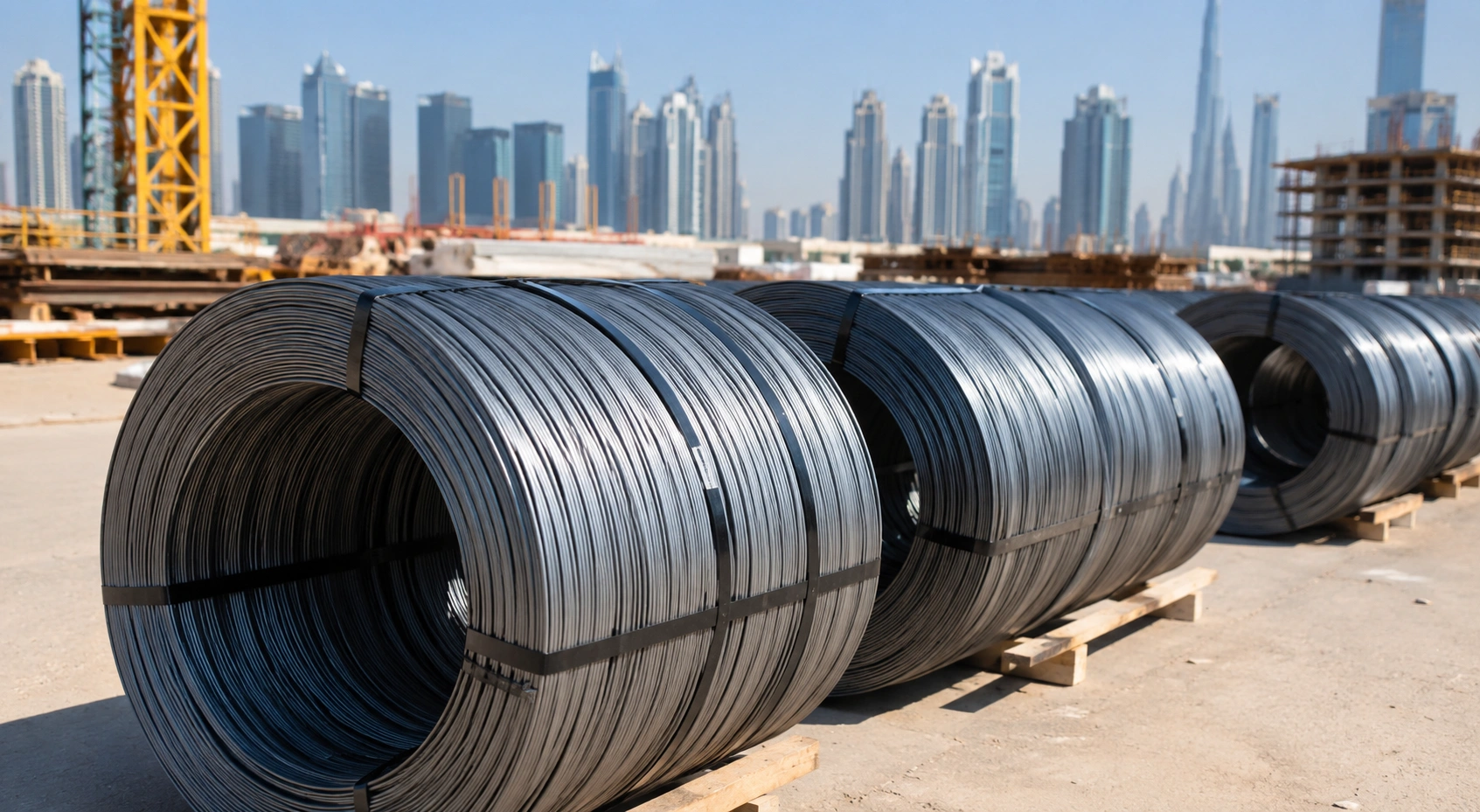
Walk into a welded wire mesh production facility in the UAE today and you will notice something that defines how reinforcement products are made: steel arriving not as straight bars stacked on a truck, but as compact coils loaded directly onto decoilers that feed automatic mesh welding lines. This is not a passing trend. It reflects how reinforcement steel is actually processed at industrial scale across the Emirates.
It is worth clearing up a common misconception at the outset. Compact coils are not a replacement for rebar on construction sites. Contractors work to a bar bending schedule and use straight rebar for structural elements, and that remains the correct supply route for site work. Compact coils sit further upstream in the supply chain as a manufacturing input, used primarily by welded wire mesh producers, stirrup and link fabricators, precast plants, and general engineering workshops running coil-fed equipment.
This guide explains exactly what compact coils are, the specifications you need to know, where they are actually used, and how to evaluate a compact coil supplier for production requirements.
What Are Compact Coils?
Compact coils are reinforcement steel bars produced and supplied in continuous coiled form rather than cut and bundled as straight lengths. The steel is cold drawn or hot rolled into a continuous strand and wound tightly into a coil, typically weighing between 1.5 to 3 tonnes per coil depending on the diameter and producer specification.
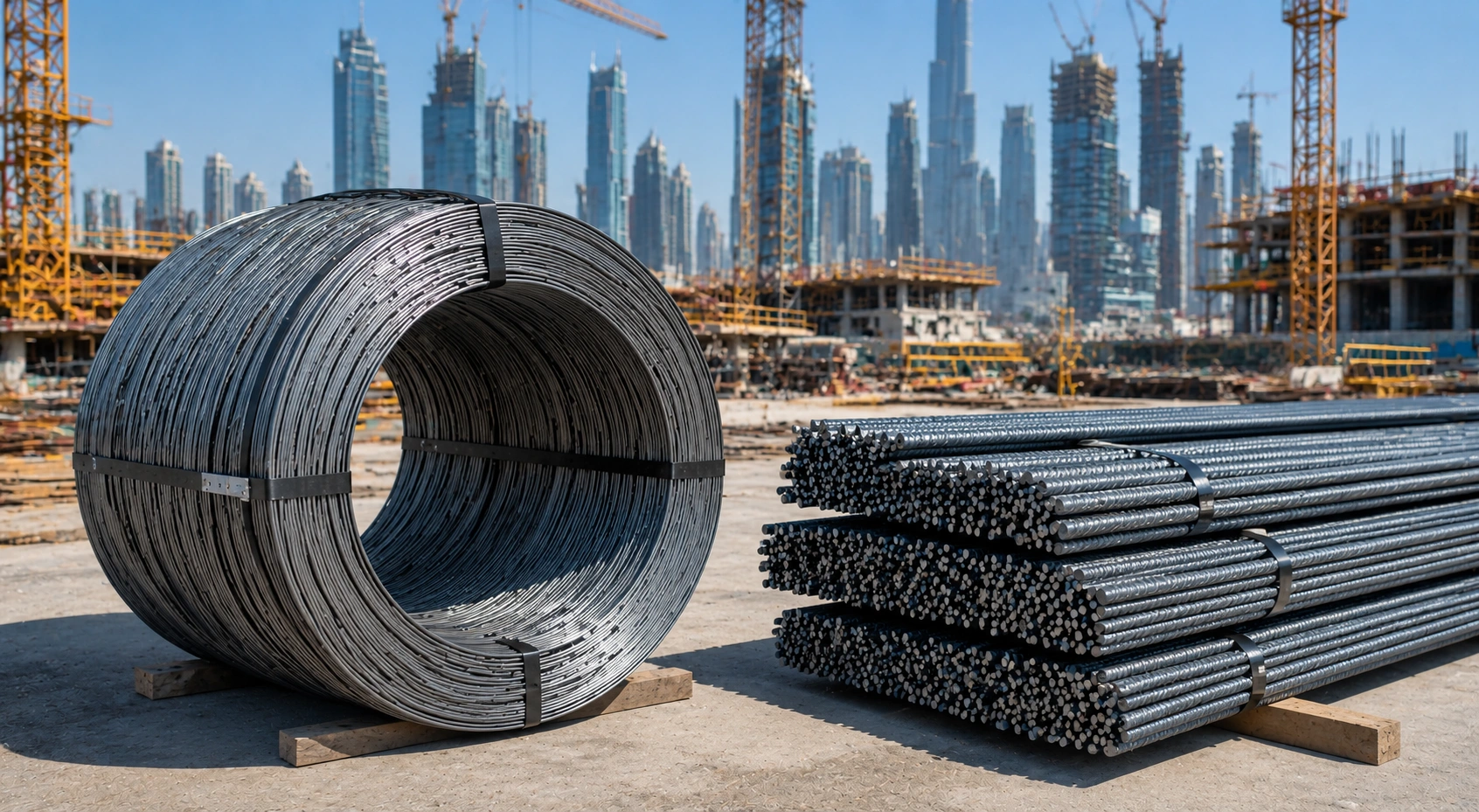
Unlike straight rebar, which arrives at site already cut to standard lengths of 6m or 12m and ready for fixing, compact coils arrive at a production facility as raw feedstock. They are uncoiled, straightened, and then welded or cut into a finished product — most commonly welded wire mesh, but also stirrups, links, wire products, and fabricated components. This difference in role, not simply in format, is what determines where each product belongs in the supply chain.
At AL Jessour Steel, our cold drawn steel compact coils are manufactured using German technology to deliver consistent diameter control and high bond reinforcement steel performance across the full coil length, something that matters significantly once the material is running continuously through a mesh welding or straightening line at production speed.
Compact Coil Steel Specifications in UAE Construction
Understanding the technical specifications of compact coils helps production and procurement teams order the right product for their equipment and finished product requirements.
Diameter Range
Compact coils are typically supplied in diameters from 6mm to 16mm, with 6mm, 8mm, 10mm, and 12mm being the most commonly consumed sizes in welded wire mesh production, matching the standard wire diameters specified in mesh sheets used across UAE projects.
Coil Weight
Standard coil weights range from 1.5 to 3 tonnes, though this varies by manufacturer and diameter. Smaller diameters such as 8mm typically produce lighter coils, while heavier coils are common for 10mm and 12mm diameters due to the greater length of wire wound into the same physical coil size. Consistent coil weight matters in continuous production because it determines changeover frequency on the line.
Yield Strength and Grade
Compact coils are manufactured to the same grade requirements as straight rebar, typically BS 4449 Grade B500A, which meets the same requirement B500B depending on the ductility requirement, with a minimum yield strength of 500 N/mm². The coiling process itself does not change the steel grade, but it does require tighter manufacturing tolerances to ensure the bar straightens correctly without residual curvature. Our guide to BS 4449 vs ASTM A615 reinforcement steel standards explains how these grades compare.
Surface Profile
Deformed (ribbed) surface profiles are standard for compact coils used in structural mesh and reinforcement products, ensuring the same high bond reinforcement steel performance as deformed steel bars once the material is processed and placed in concrete.
Coil Core Diameter and Outer Diameter
These dimensions matter specifically for compatibility with decoilers, mesh welding lines, and straightening and cutting machines. Most UAE-based fabrication plants are configured for a standard inner core diameter, so confirming machine compatibility with your supplier before ordering is essential.
For reinforcement work requiring straight cut bars rather than coil-fed production, our MS cold drawn deformed steel bars and MS steel plain bars are produced to the same certified standards.
Where Compact Coils Are Actually Used
Welded Wire Mesh Production
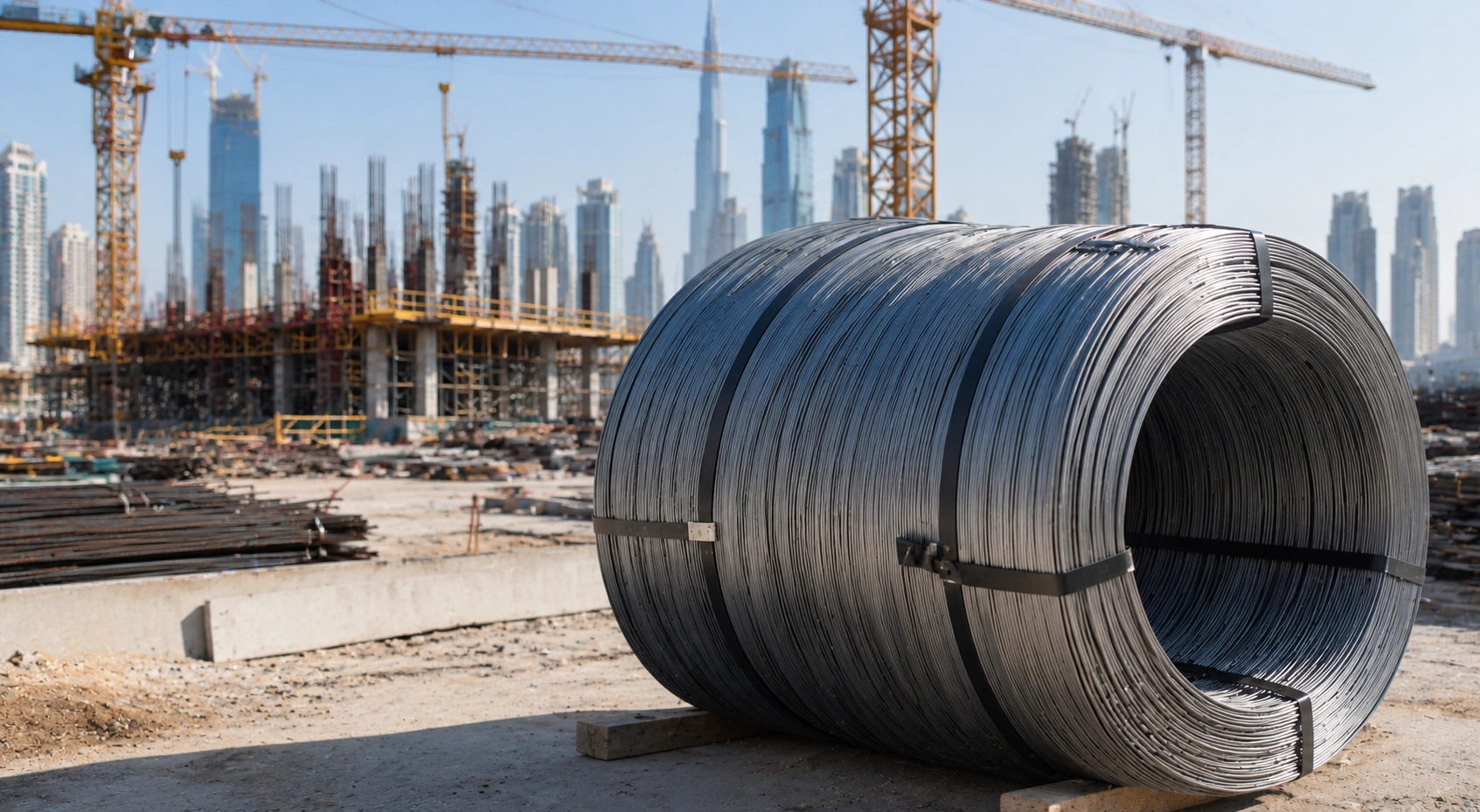
This is the single largest application for compact coils in the UAE. Mesh welding lines draw wire simultaneously from multiple decoilers, straighten it, and resistance-weld the longitudinal and transverse wires into finished sheets or rolls. The process is continuous by design, which makes coiled feedstock the only practical input format, since straight bar cannot feed a mesh line.
Stirrup and Link Fabrication
Automatic stirrup benders draw directly from coils to produce shear links in high volume at consistent dimensions, far faster and more accurately than cutting and bending straight bar by hand.
Precast and Rebar Processing Plants
Facilities producing precast elements or supplying cut and bent rebar to sites run coil-fed straightening and cutting machines for repetitive, high-volume bar sizes.
General Engineering and Wire Products
Workshops producing frames, cages, grilles, and fabricated steel components use coils where continuous feedstock and consistent diameter matter more than fixed length bar.
Site-based structural reinforcement, including slabs, beams, columns, and foundations, remains straight rebar work. Contractors order to a reinforcement schedule, and cut and bent straight bar delivered to site is the established and appropriate supply route for those applications. Our guide on plain bars vs deformed bars covers which bar type applies to each structural element.
Compact Coil vs Straight Rebar — Key Differences
| Factor | Compact Coils | Straight Rebar |
| Primary User | Manufacturers and fabricators | Contractors and site teams |
| Main Application | Welded wire mesh, stirrups, wire products | Structural concrete reinforcement on site |
| Supply Format | Continuous coil, processed in plant | Pre-cut fixed lengths (6m/12m) |
| Processing Waste | Minimal, cut or welded to exact length | 5-10% typical offcut waste |
| Labor Requirement | Lower, machine fed | Higher, manual handling and fixing |
| Storage Footprint | Compact, stacked coils | Bulky, requires long storage racks |
| Handling | Crane or forklift onto decoiler | Manual carrying and placing |
| Inventory Management | Simplified, tracked by weight and diameter | Complex, multiple lengths and shapes tracked |
| Equipment Needed | Decoiler, mesh welding or straightening line | Bar bending machine, manual tools |
| Best Suited For | Continuous, high-volume production | Structural elements to a bending schedule |
The two formats are complementary rather than competing. A mesh manufacturer and a main contractor are buying different products for different stages of the same reinforcement supply chain.
Benefits of Compact Coils in Production
Continuous Feed
Automatic mesh welding and straightening lines are built around uninterrupted material supply. Coils allow a line to run for extended periods without the stoppages that loading individual straight bars would create.
Minimal Material Waste
Straight rebar supplied in fixed 6m or 12m lengths frequently results in offcut waste when the required length does not divide evenly into the stock length. Compact coils are cut or welded to the exact length needed for each product, virtually eliminating this waste category, which becomes a meaningful saving at production volumes.
Continuity Without Welded Joints
Because coils are continuous lengths of steel rather than welded or spliced sections, there are no weak points introduced within a single coil run. For mesh production this supports consistent wire quality across the full sheet.
Simplified Inventory Management
Stock is tracked by weight and diameter rather than by dozens of individual cut lengths, reducing the administrative burden on store and procurement teams in a manufacturing environment.
Compact Storage Footprint
Coils stack vertically and take up significantly less floor space than long straight bar racking, an important consideration in industrial units across Dubai, Sharjah, and Abu Dhabi.
Faster Production Rate
Once fed into a welding or straightening line, coils are processed at a continuous, high speed rate that significantly outpaces manual cutting, allowing manufacturers to meet the delivery volumes UAE projects demand.
For teams specifying finished product, understanding how reinforcement mesh is used across modern UAE projects shows where coil-produced mesh fits into the overall reinforcement package.
Compact Coils for Automatic Straightening and Welding Machines
The performance of compact coils depends on tolerance requirements that straight rebar does not need to meet.
Diameter consistency along the entire coil length is critical, as variation causes feeding errors, inconsistent welds, and inconsistent straightening. Ovality, meaning how round the cross-section remains after coiling and uncoiling, must stay within tight limits or the wire will not feed smoothly through rollers and welding heads. Coil set, the tendency of the bar to retain curvature after straightening, must be minimal to ensure finished mesh sheets lie flat and cut bars are genuinely straight.
This is why sourcing compact coils from a manufacturer with tight production tolerances matters significantly more than it does for straight bar. A coil that does not perform well on a production line creates downtime, rejected output, and missed delivery dates, regardless of how the mill certificate reads on paper.
Choosing a Compact Coil Supplier in the UAE
Not every steel manufacturer is equipped to produce compact coils to the tolerances required for automatic mesh welding and straightening equipment. When evaluating a compact coil reinforcement steel supplier UAE manufacturers should consider a few specific factors beyond price.
Confirm the manufacturing process and equipment used for coiling, since diameter consistency depends heavily on production technology. Request mill certificates that confirm yield strength, tensile strength, and chemical composition in line with BS 4449 or the applicable project standard. Ask about coil weight tolerance and core diameter compatibility with your decoiler and line model. Check on delivery lead times and whether the supplier can maintain consistent supply across sustained production runs, since switching coil sources mid-run can introduce variation that affects machine performance and finished product quality.
AL Jessour Steel Industries manufactures compact coils using German technology, giving UAE manufacturers a locally produced alternative with the diameter consistency and certification needed for reliable welded wire mesh and fabrication output. View our compact coil specifications or contact our technical team to discuss volumes and delivery schedules for your production requirements.
Frequently Asked Questions
1. What is the difference between compact coils and straight rebar?
Compact coils are continuous lengths of reinforcement steel wound into a coil and supplied uncut, while straight rebar is pre-cut into fixed lengths such as 6m or 12m before delivery. Compact coils are a manufacturing input, processed on automatic lines into products such as welded wire mesh and stirrups, whereas straight rebar is the format contractors use for structural reinforcement on site.
2. What are compact coils mainly used for?
The primary use of compact coils in the UAE is welded wire mesh production, where continuous wire is drawn from decoilers and resistance-welded into mesh sheets. They are also used for automatic stirrup and link fabrication, precast and rebar processing operations, and general engineering wire products.
3. Do contractors use compact coils on site?
Generally no. Contractors work to a reinforcement schedule and use straight rebar, delivered either cut and bent or processed at a fabrication yard. Compact coils are used by manufacturers and fabricators operating coil-fed production equipment rather than by site teams fixing reinforcement.
4. What diameters are available for compact coils in the UAE?
Compact coils are typically available in diameters from 6mm to 16mm, with 6mm, 8mm, 10mm, and 12mm being the most widely consumed sizes in welded wire mesh production and general fabrication.
5. Do compact coils meet the same structural standards as straight rebar?
Yes. Compact coils are manufactured to the same grade and standard requirements as straight rebar, typically BS 4449 Grade B500A, which meets the same requirements as B500B depending on the ductility requirement, with a minimum yield strength of 500 N/mm². The coiling process does not reduce structural performance provided the steel meets the required diameter consistency and coil set tolerances.
6. Can compact coils be used with any straightening or welding machine?
Compact coils need to match the core diameter and weight tolerance specifications of the equipment being used. Confirming compatibility with your supplier before ordering is important, since mismatched coil dimensions can cause feeding issues and production downtime.